📚 Publications
Online multi-camera people tracking with spatial-temporal mechanism and anchor-feature hierarchical clustering
Conference on Computer Vision and Pattern Recognition (CVPR) Workshops 2024
Multi-camera Multi-object tracking (MTMC) surpasses conventional single-camera tracking by enabling seamless object tracking across multiple camera views. This capability is critical for security systems and improving situational awareness in various environments. This paper proposes a novel MTMC framework designed for online operation. The framework employs a three-stage pipeline: Multi-object Tracking (MOT), Multi-target Multi-camera Tracking (MTMC), and Cross Interval Synchronization (CIS). In the MOT stage, ReID features are extracted and localized tracklets are created. MTMC links these tracklets across cameras using spatial-temporal constraints and constraint hierarchical clustering with anchor features for improved inter-camera association. Finally, CIS ensures the temporal coherence of tracklets across time intervals. The proposed framework achieves robust tracking performance, validated on the challenging 2024 AI City Challenge with a HOTA score of 51.0556.
View Paper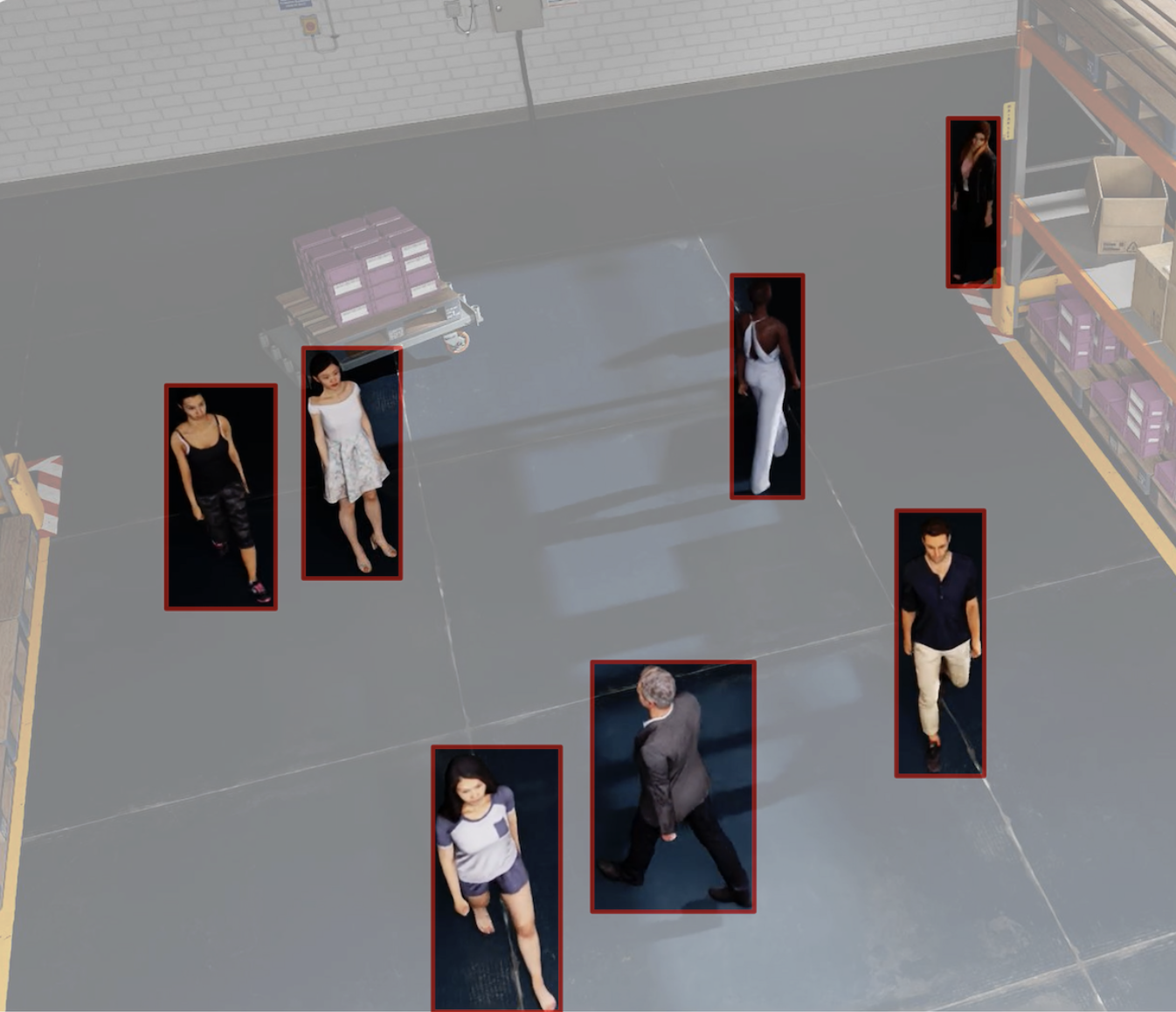
PTITReID: Progressive Three-Stage Iterative Learning for Person Re-identification
arXiv
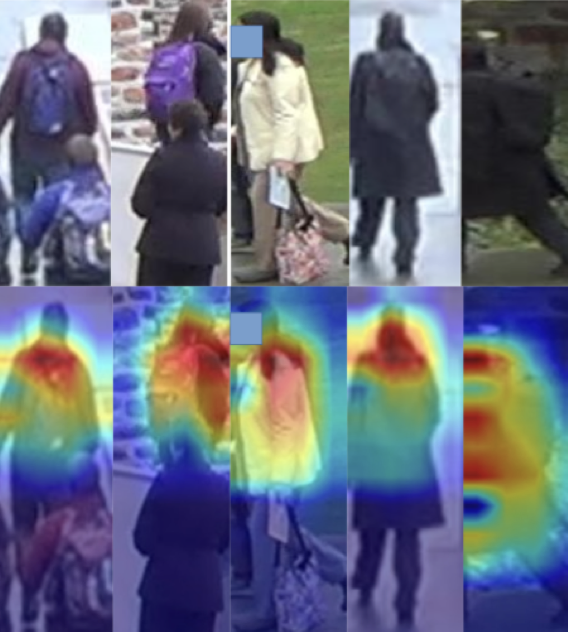
Re-identification (ReID) is a critical computer vision task with applications in surveillance, intelligent transportation, and robotics, requiring the matching of objects or individuals across diverse camera views despite variations in appearance, lighting, and occlusions; this paper presents PTITReID, a novel Progressive Three-Stage Iterative Learning method that sets a new benchmark for ReID performance on both holistic and occluded datasets; distinctively, PTITReID integrates prompt learning, image feature learning, and fine-tuning with prototypical contrastive learning, significantly outperforming state-of-the-art methods in accuracy and robustness; by enhancing feature extraction efficiency and adaptability, PTITReID achieves superior generalization across diverse re-identification tasks; extensive experiments on multiple benchmark datasets validate its effectiveness in handling complex scenarios, including occlusions and dataset variability, establishing PTITReID as a robust and versatile solution for real-world ReID challenges.
Contactless Body Measurement System Using Single Fixed-Point RGBD Camera Based on Pose Graph Reconstruction
IEEE Access 2024
Accurate anthropometric measurements are critical in the healthcare industry for effective diagnosis and patient monitoring, necessitating standardized procedures to ensure accuracy, reliability, and consistency across measurement data; traditional body measurement, administered by trained physicians, is susceptible to human bias and often requires intrusive direct physical contact with the patient, while other automated systems tend to be expensive and complicated to set up and operate; this study aims to develop a cost-effective method for measuring anthropometric parameters using a single RGBD camera designed for easy deployment and low computing resources, requiring only a 360-degree rotation of the participant in front of the camera to reconstruct a detailed 3D human body model based on pose graph reconstruction; a study involving 20 participants evaluated the accuracy of the proposed system compared to traditional tape measure measurements, showing a height percentage error of 0.55%, hip measurement error of 3.84%, and waist measurement error of 6.90%; the integration of the ellipse shrinkage method into the algorithm effectively improved hip and waist measurements by minimizing the impact of clothing.
View Paper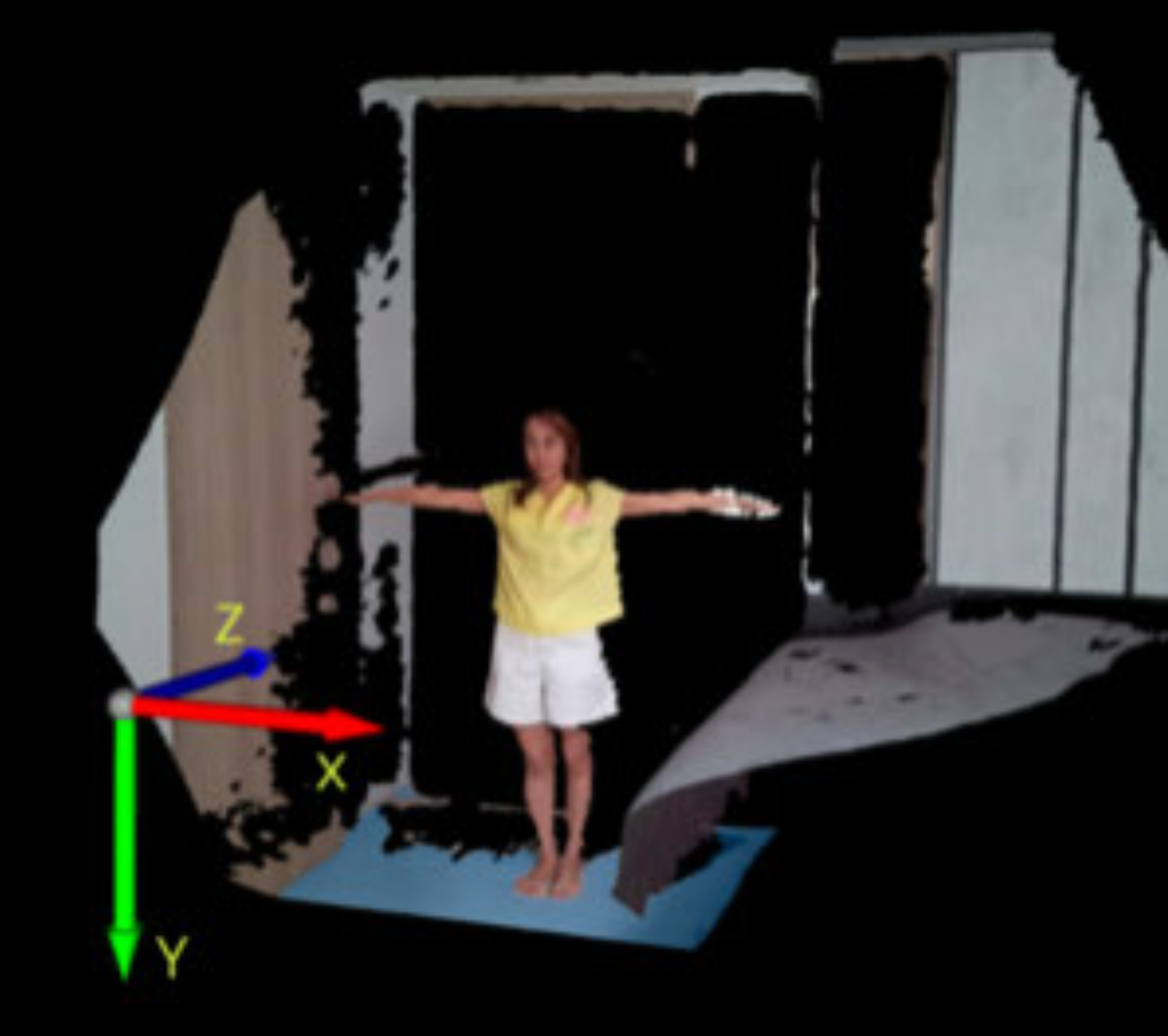
Real-time Multiple Analog Gauges Reader for an Autonomous Robot Application
iSAI-NLP 2022
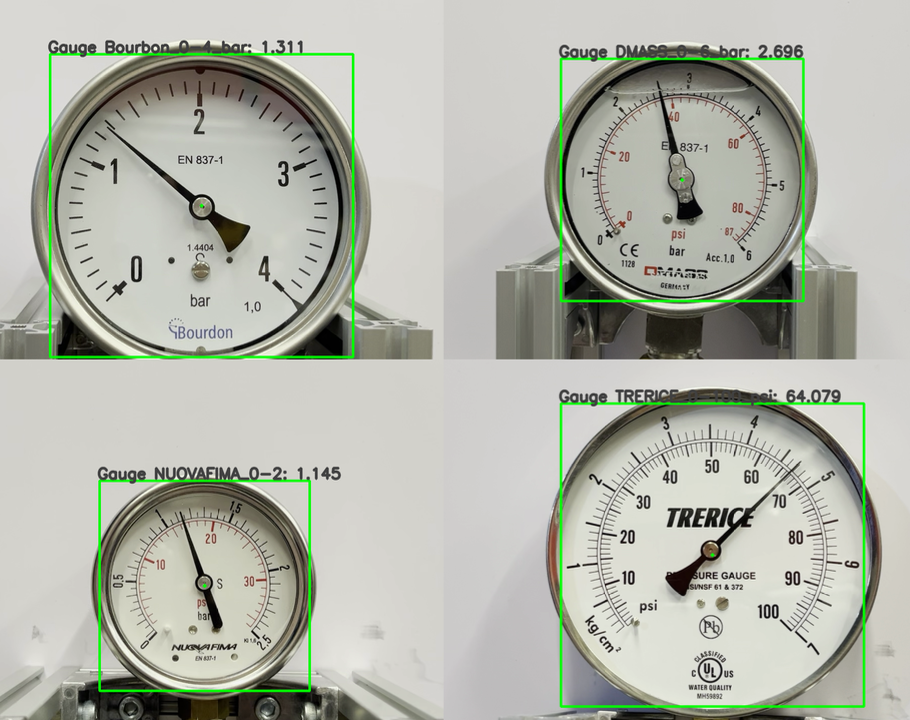
With the development of robotic technology, autonomous robots have been extended to production industries to substitute manual tasks like routine operations; in the general manufacturer, analog gauges are the most commonly utilized and require operators for manual reading, thus an analog gauge reading can be considered a fundamental feature for operator robots to be fully automated for inspection purposes; this paper presents methods for reading multiple analog gauges automatically using a camera, with the processing pipeline consisting of two main stages: 1) gauge detector for extracting individual gauges and 2) gauge reader for estimating gauge values; for gauge detectors, we propose three different YOLOv5 architecture sizes, while the gauge readers are mainly categorized into a computer-vision approach (CV) and deep learning regression approaches, with the deep learning approaches consisting of two CNN-based backbones, ResNet50 and EfficientNetV2B0, and one transformer-based SwinTransformer; finally, we introduce the feasibility of the combination of each gauge detector and reader; as a result, the YOLOv5m detector with the EfficientNetV2B0 CNN backbone reader theoretically achieves the best performance but is not practical for industrial applications, while the YOLOv5m detector with the CV method is introduced as the most robust multiple gauge reader, reaching comparative performance to the EfficientNetV2B0 backbone and being more compatible with robotic applications.
View Paper